
A guide for new detectives
How to play
Every case is a fair puzzle: the answer is somewhere in the case, waiting to be found. Here is how a case runs, from the first page to the final accusation.

-

01
Take the case
A new case arrives every morning. Read the opening at your leisure, and when you’re ready, accept it: from then you have twenty-four hours to solve it, so there’s no need to finish in one sitting. The free cases and the casebook have no clock at all.
-
02
Walk the scene
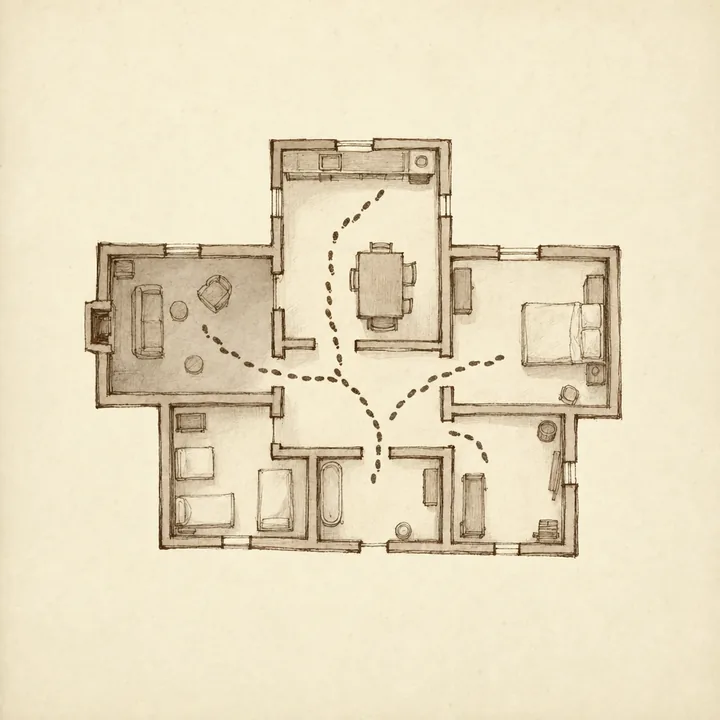
Tap a doorway to move from room to room. The little map keeps track of where you are and how the rooms connect, so nothing gets missed.
-
03
Examine what you find
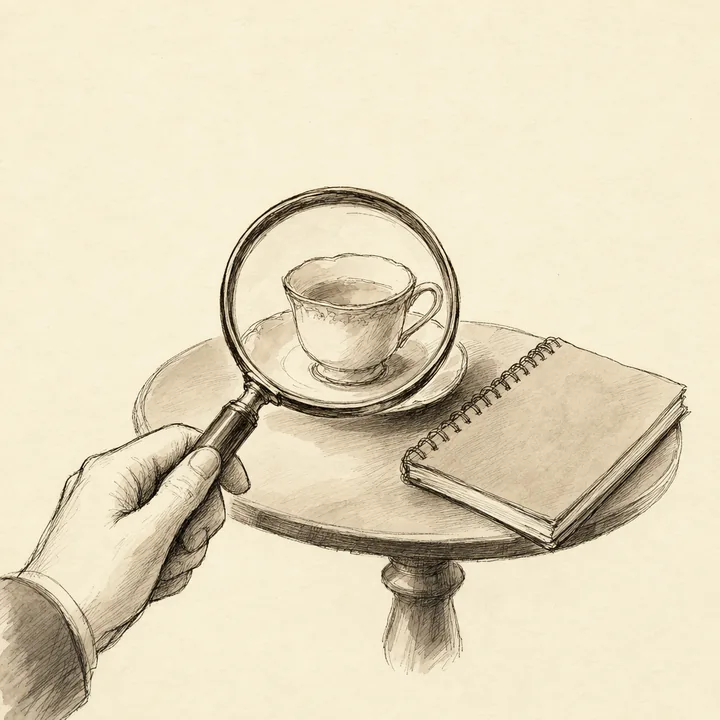
Tap anything that catches your eye. Whatever matters goes straight into your cluebook, which counts how many clues you’ve found and how many the case holds.
-
04
Question the suspects
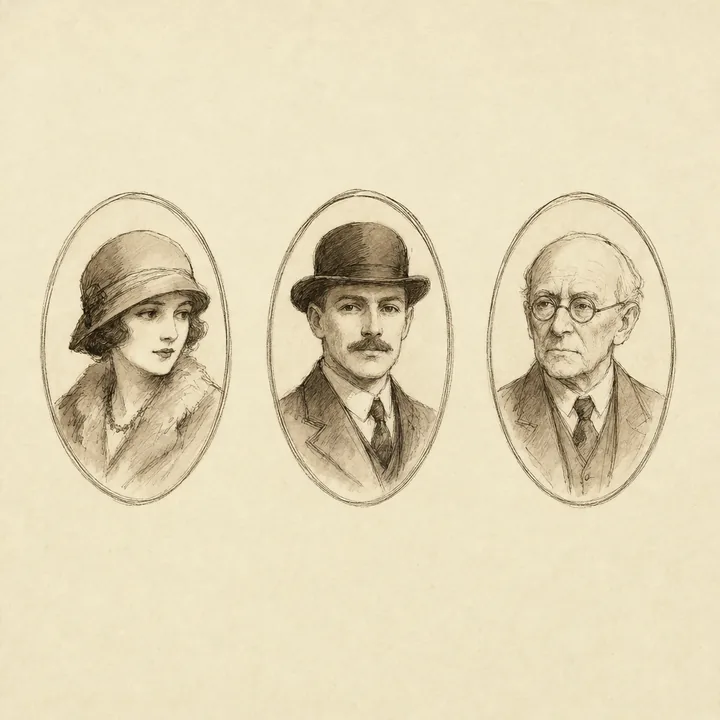
Every suspect has a story. As you learn more, new questions open up, and some of the answers won’t hold together. The suspect dossier keeps track of who you’ve spoken to.
-
05
Make your accusation
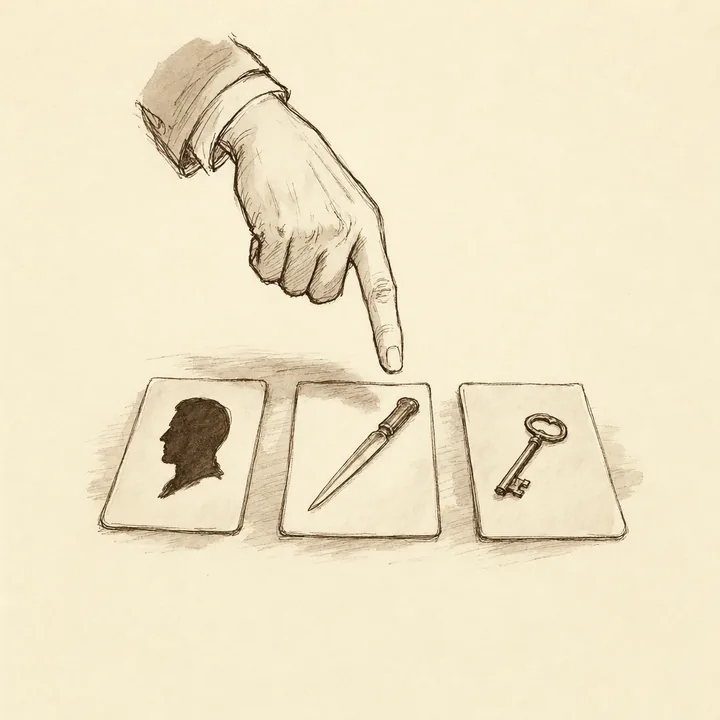
When you’re sure, name the killer, the method, and the decisive evidence that proves it. You have three accusations, so think before you point.
-
06
Close the case
Solve it, or run out of accusations, and the full story is told. Your result goes on your record, and you can share it without spoiling the answer for anyone else.
Spotting the decisive evidence
Of the three things you name in an accusation, the Decisive Evidence is one that often trips detectives up. It isn’t just any clue that points at the killer, it’s the clue that proves the murder, and every case has exactly one.
- It convicts; it doesn’t just clear. A clue that rules out another suspect narrows the field, but it doesn’t make the case against the killer. The decisive evidence ties the killer to the crime itself.
- Take it away and the case falls apart. Ask yourself: without this clue, could I still prove it? If the answer is yes, it’s only supporting evidence. The decisive clue is another one that the whole case leans on.
- Suspicion isn’t proof. A motive shows who wanted it done, and a slip in someone’s story shows who is hiding something. Neither, on its own, shows who did it.
- It's discoverable, and has to be in your cluebook. The accusation only offers evidence you’ve found. If the clue you need isn’t on the list, keep investigating. It’s somewhere in the rooms, or in someone’s answers.